India’s logistics industry is growing faster than ever. With e-commerce, quick commerce, grocery delivery, and last-mile logistics expanding into every city and town, many entrepreneurs are searching for profitable franchise opportunities in the delivery sector. One of the most searched terms in this category is Shadowfax Franchise Cost in India.
If you are planning to start a logistics business in 2026, this guide will help you understand the expected investment range, operational setup, monthly expenses, earning potential, and profit possibilities associated with a Shadowfax-style franchise or logistics partner business in India.
Important: The actual investment and earnings may vary depending on city, operational model, delivery volume, warehouse size, manpower, and company approval. Always verify the latest business terms directly during the application process.
Why Entrepreneurs Are Interested in Logistics Franchises in 2026
The Indian delivery ecosystem is no longer limited to metro cities. Tier-2 and Tier-3 cities are witnessing rapid growth in:
- E-commerce deliveries
- Grocery and pharmacy deliveries
- Same-day courier services
- B2B logistics movement
- Hyperlocal delivery networks
This growth has created demand for local delivery hubs, warehouse operators, fleet managers, and franchise partners who can manage logistics operations efficiently.
Estimated Shadowfax Franchise Cost in India (2026)
The investment generally depends on the scale of operations. A small delivery hub requires significantly less capital than a full warehouse and fleet operation.
| Business Model | Estimated Investment |
|---|---|
| Small delivery point | ₹1 lakh – ₹3 lakh |
| Local delivery hub | ₹3 lakh – ₹7 lakh |
| Mid-size city operation | ₹7 lakh – ₹15 lakh |
| Warehouse + fleet setup | ₹15 lakh – ₹30 lakh+ |
These are indicative ranges for planning purposes and may differ based on location and business requirements.
What Does the Investment Include?
A logistics franchise investment is usually divided into setup costs and working capital.
1. Office / Hub Setup
- Rental deposit
- Basic interiors
- Computer and internet
- CCTV and security
- Branding and signage
2. Delivery Operations
- Delivery bags and equipment
- Barcode scanners (if required)
- Mobile devices
- Packaging and dispatch materials
3. Manpower
- Delivery executives
- Hub supervisor
- Operations coordinator
4. Working Capital
- Salaries
- Fuel and transportation
- Electricity and internet
- Maintenance expenses
- Miscellaneous operational costs
Sample Investment Breakdown (Tier-2 City)
| Expense Head | Estimated Cost |
| Office rent deposit | ₹40,000 |
| Interior & furniture | ₹60,000 |
| Computer & internet setup | ₹25,000 |
| Delivery equipment | ₹35,000 |
| Initial marketing | ₹20,000 |
| Working capital (2 months) | ₹1,20,000 |
| Total Estimated Investment | ₹3,00,000 |
A Tier-2 city hub can often be started with approximately ₹3 lakh if the operation is kept lean in the initial phase.
Monthly Operating Expenses
| Expense | Approx. Monthly Cost |
| Rent | ₹15,000 – ₹35,000 |
| Staff salaries | ₹40,000 – ₹1,20,000 |
| Fuel / transportation | ₹20,000 – ₹80,000 |
| Internet & utilities | ₹3,000 – ₹10,000 |
| Maintenance | ₹5,000 – ₹15,000 |
| Miscellaneous | ₹5,000 – ₹20,000 |
Typical monthly operating costs may range from ₹90,000 to ₹2,80,000 depending on delivery volume and city.
How Does a Logistics Franchise Earn Revenue?
Revenue is generally linked to operational activity such as:
- Number of deliveries completed
- Pickup volume
- Service area coverage
- Fleet management
- Warehouse handling
- Performance incentives
Higher delivery density usually improves profitability because fixed costs are spread across more orders.
Estimated Monthly Revenue & Profit
Small Hub Example
| Metric | Estimate |
| Monthly revenue | ₹1.5 – ₹2.5 lakh |
| Operating cost | ₹1.0 – ₹1.8 lakh |
| Estimated profit | ₹30,000 – ₹70,000 |
Mid-Size City Operation
| Metric | Estimate |
| Monthly revenue | ₹4 – ₹8 lakh |
| Operating cost | ₹3 – ₹6 lakh |
| Estimated profit | ₹1 – ₹2 lakh |
Large Hub / Warehouse
| Metric | Estimate |
| Monthly revenue | ₹10 – ₹25 lakh+ |
| Operating cost | ₹8 – ₹20 lakh |
| Estimated profit | ₹2 – ₹5 lakh+ |
These figures are illustrative business estimates and not guaranteed earnings.
Break-Even Period
| Investment Level | Approx. Break-Even |
| ₹1 – ₹3 lakh | 6 – 12 months |
| ₹3 – ₹7 lakh | 8 – 18 months |
| ₹7 – ₹15 lakh | 12 – 24 months |
| ₹15 lakh+ | 18 – 36 months |
Efficient operations and strong local delivery demand can shorten the break-even timeline.
Which Cities Offer Better Potential?
High-demand locations typically include:
- Delhi NCR
- Mumbai
- Bengaluru
- Hyderabad
- Pune
- Ahmedabad
- Jaipur
- Lucknow
- Indore
- Chandigarh
- Patna
- Surat
Fast-growing Tier-2 cities often provide lower setup costs and less competition.
Advantages of Starting a Logistics Franchise
- Growing e-commerce market
- Recurring delivery demand
- Scalable business model
- Lower inventory requirement
- Technology-driven operations
- Opportunity to expand to multiple hubs
Risks to Consider
Before investing, evaluate:
- Local delivery demand
- Availability of delivery staff
- Rental costs
- Competition from other logistics players
- Cash flow management
- Seasonal order fluctuations
A detailed local market study is essential.
Documents Commonly Required
- Aadhaar Card
- PAN Card
- Address proof
- Bank account details
- GST registration (if applicable)
- Business entity documents (if any)
Requirements may vary during the application process.
Is a Logistics Franchise Suitable for First-Time Entrepreneurs?
Yes, many delivery businesses are started by first-time entrepreneurs because they do not require manufacturing expertise. However, success depends heavily on:
- Team management
- Daily operational discipline
- Customer service
- Route planning
- Cost control
Expert Tip: Start Small, Scale Smart
A common mistake is investing heavily before understanding local delivery demand. A better approach is:
- Start with a small hub.
- Build delivery volume.
- Stabilize operations.
- Add riders and routes.
- Expand to nearby areas.
- Upgrade to a larger hub when justified.
This reduces financial risk and improves cash flow management.
Final Verdict
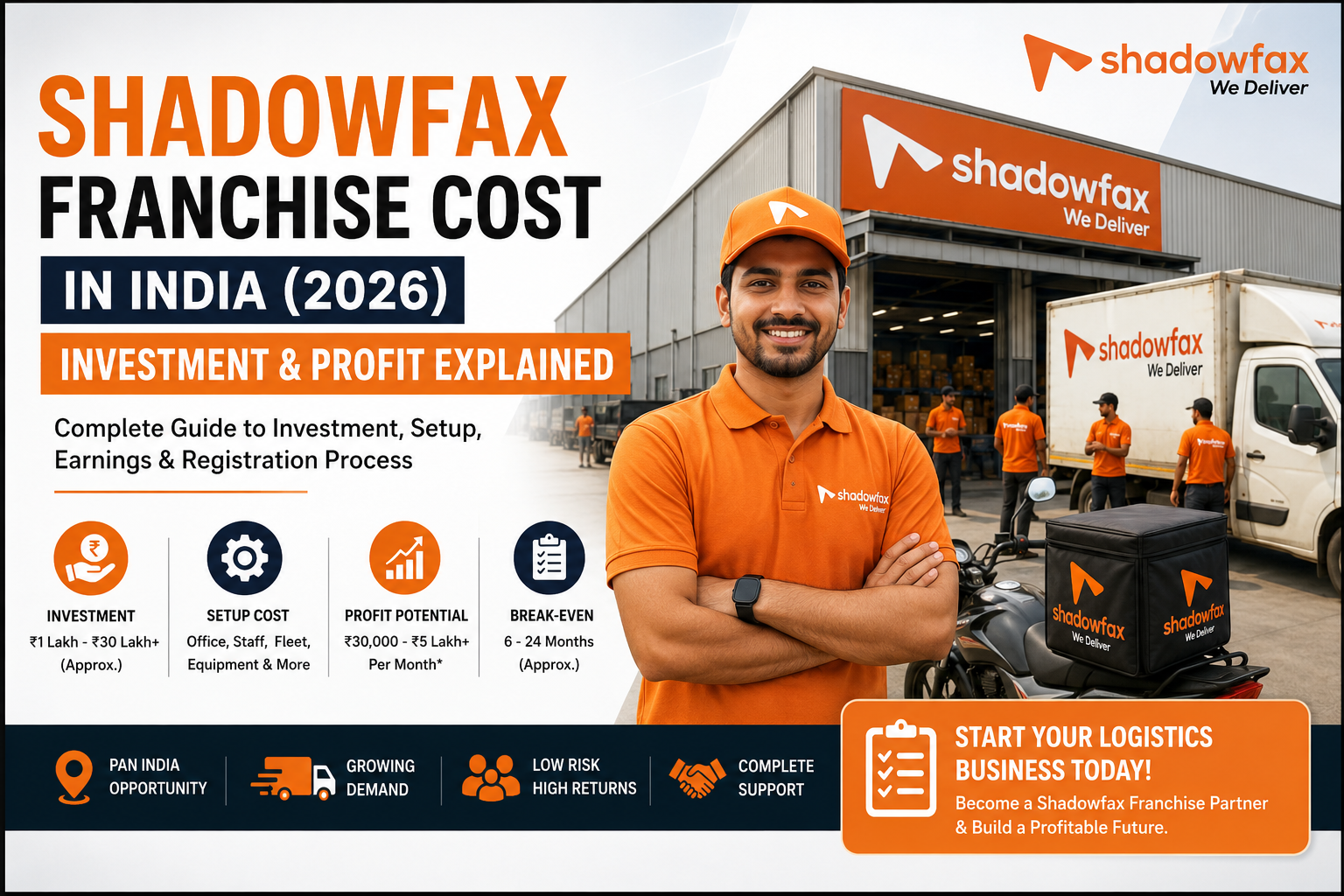
The Shadowfax Franchise Cost in India (2026) can range from approximately ₹1 lakh for a small delivery setup to ₹30 lakh or more for a large warehouse and fleet operation. For most entrepreneurs, a practical starting range is ₹3–7 lakh, which can support a local delivery hub with moderate operations.
The biggest opportunity lies in India’s rapidly expanding last-mile delivery market. Entrepreneurs who focus on operational efficiency, customer service, and local market execution have the potential to build a sustainable logistics business over time.